
Does a hard-to-turn key mean I need a new lock?
Not necessarily. The key, cylinder, latch and door alignment are different possible contributors. Describe when the resistance occurs and have the actual fault assessed.
A sticking key, loose handle or deadbolt that needs a shove deserves a closer look. Describe the symptom before replacing hardware; sometimes the door’s fit is part of the problem.
 LOCK REPAIR / ROSWELL
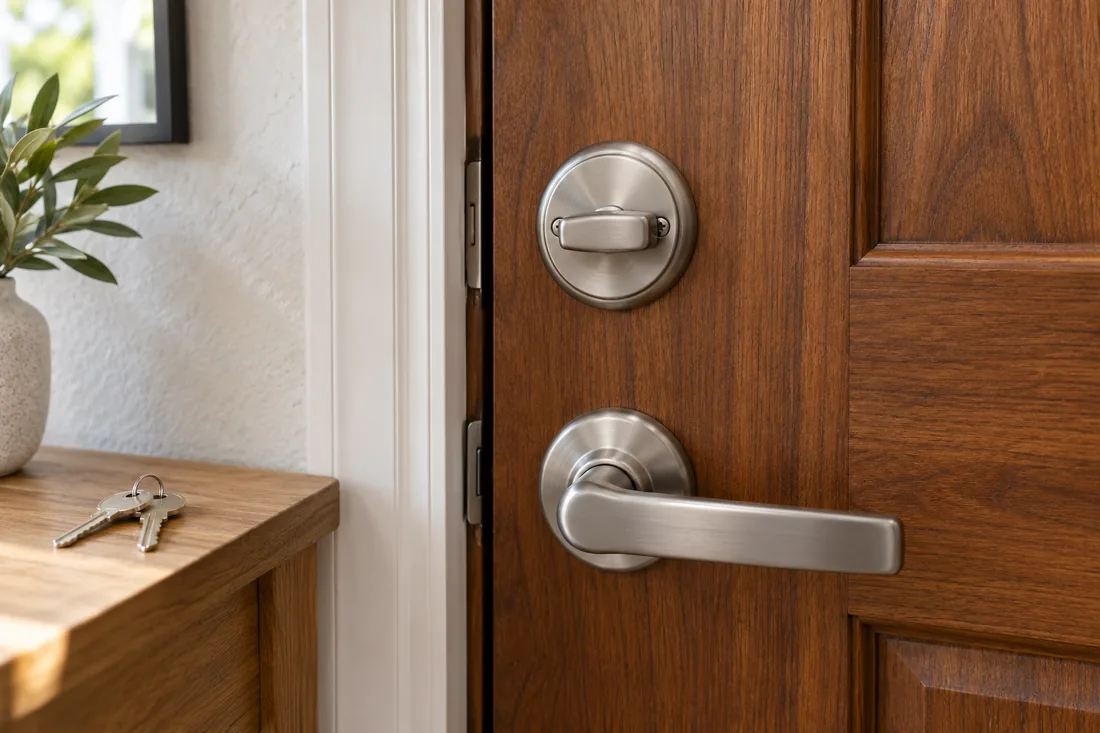
If it is safe to do so, observe whether the lock behaves differently while the door is open. A deadbolt that moves freely in that position but catches when closed may be meeting resistance at the frame. A key that resists in both positions points to a different set of possibilities. This observation is a useful description, not a diagnosis. Avoid repeatedly forcing the key or operating an unreliable lock when doing so might leave you unable to get back inside.
Describe when the problem happens.
Door fit and lock condition both matter.
Match the solution to the actual fault.
The cylinder accepts the key, the latch or bolt engages the frame, and the handle operates the door’s hardware. Hinges, a closer and the condition of the frame can affect how those pieces meet. Explain whether the trouble is turning, latching, closing or releasing. For a business entrance, include any recent change such as a handle becoming loose or the door beginning to drag. A precise symptom helps keep the conversation focused on what actually needs examination.
A matching handle set or older door can be a reason to explore a compatible repair before choosing a complete replacement. It is not a guarantee that parts are available or that a repair will be appropriate. Take photographs of the inside, outside and edge, and keep any visible manufacturer information. In Historic Roswell, mention a wish to retain the existing appearance before work is planned, especially if changing the external hardware would affect a protected or managed property.
Ask which component is causing the issue, what the proposed repair changes, and whether a separate door or frame problem remains. A repair that restores one function may not address a different concern about lost keys; rekeying is a separate access decision. At handover, operate the handle and lock normally rather than holding the door in a special position. If the proposed solution depends on an adjustment you must repeat each time, ask for that limitation to be explained.
Not necessarily. The key, cylinder, latch and door alignment are different possible contributors. Describe when the resistance occurs and have the actual fault assessed.
Avoid forcing it. Explain the problem and whether you still have access through another authorized entrance before arranging an assessment.
Or your car key. Tell us what happened, where you are and what you need.