
Is rekeying the same as changing the whole lock?
No. Rekeying changes the working key in a suitable cylinder; replacing a lock changes hardware. Either choice still depends on the condition and compatibility of the existing door and lock.
Rekeying changes which key operates a suitable lock while retaining much of the existing hardware. It is worth considering when access has changed but the lock itself still works well.
 LOCK REKEYING / ROSWELL
Rekeying changes the internal key arrangement of a compatible cylinder so a different key operates it. It does not give a worn handle a new finish, repair a damaged door or add electronic access. That makes the condition of the current hardware important. If the lock is already stiff or unreliable, describe that before choosing rekeying on price alone. The useful question is whether the existing lock is both suitable for rekeying and worth keeping in service.
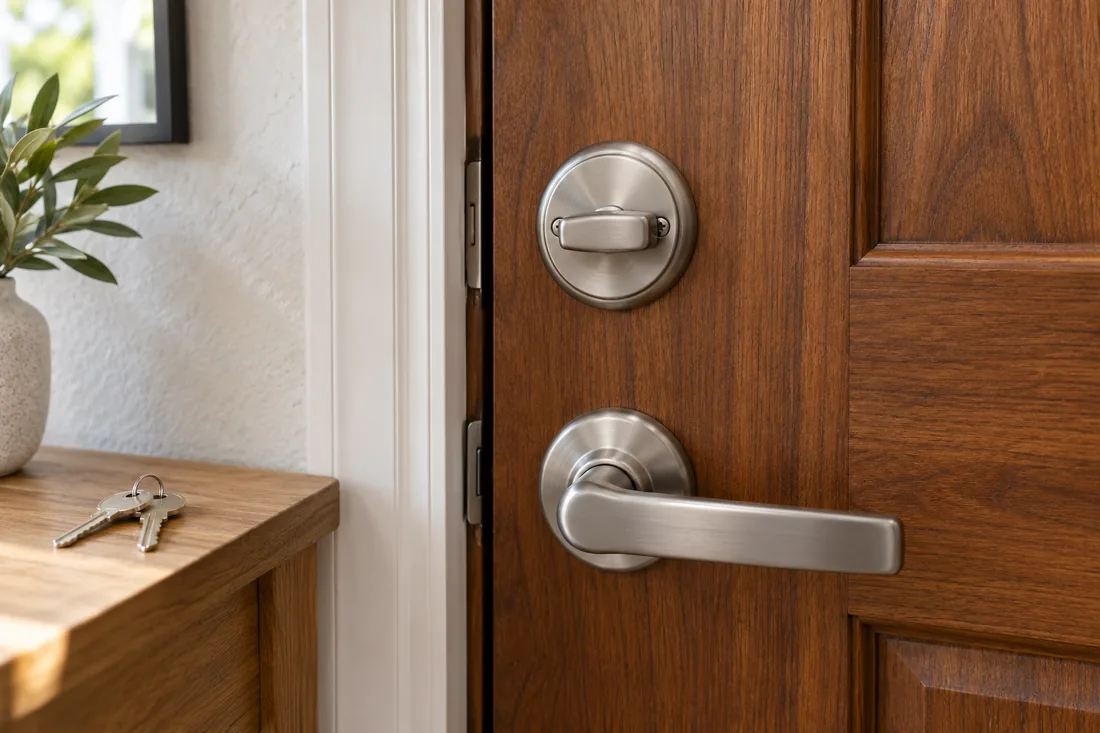
Suitable existing hardware may remain.
A different mechanical key operates the lock.
Codes and app users need their own review.
A property may have more keyed cylinders than obvious entrances. Walk through the doors you are authorized to change and note separate deadbolts, handles and any double-sided keyed hardware. Then decide who needs new keys and whether compatible entrances should share one. A garage remote, keypad code or access card belongs on a separate list. For a Roswell move-in, this inventory makes the changeover much clearer than asking for a general lock change without describing the actual openings.
Apartment buildings and commercial properties can have key arrangements that extend beyond a single occupant’s door. Before changing a cylinder, ask the owner or manager whether it must remain part of a master-key or restricted system. Existing keys that look alike may not be interchangeable, and locks with different finishes may still require different key types. Compatibility should be checked at the hardware rather than inferred from a photograph of a key or a broad brand label.
After rekeying, test the new keys in every agreed cylinder with the door open first, then check normal operation when closed. Label spare keys discreetly and decide how they will be issued. The old key should no longer operate the rekeyed cylinder, but any untouched lock may still accept it. If the reason for the work was a lost set of keys, review the rest of that set: other doors, padlocks and electronic credentials may need their own decisions.
No. Rekeying changes the working key in a suitable cylinder; replacing a lock changes hardware. Either choice still depends on the condition and compatibility of the existing door and lock.
Possibly, depending on the lock and access to it. Explain that the key is missing when requesting the work so the requirements and estimate can be assessed.
Or your car key. Tell us what happened, where you are and what you need.